`/`
`/`
- ` fragment (no `
- Cracked and delaminated rubber fuel lines across a wide range of outboard brands
- Clogged fuel filters loaded with brown, varnish-like sediment
- Gummy sludge in carburetor bowls and jets
- Damaged float needle seats and gaskets throughout the fuel circuit
- Deteriorated fiberglass tank interiors releasing particles into the fuel supply
- Hard starting after sitting: If the engine cranks but takes much longer than usual to fire after a week or two of non-use, stale or phase-separated fuel is a primary suspect - not the battery, not the starter.
- Rough idle and stumbling at low throttle: An engine that idles smoothly when cold but stumbles as it warms up, or hesitates during initial acceleration, is often running a lean mixture caused by water in the fuel feed.
- Single-cylinder misfires in a multi-cylinder outboard: When one cylinder fires inconsistently while others run clean, uneven fuel delivery from a partially contaminated carburetor bowl is a common cause.
- Stalling under load: The engine runs at idle but dies when the throttle advances. Phase-separated fuel can sustain a slow steady draw but fails under the surge demand of acceleration.
- Visible water in the filter bowl: If your separator filter has a clear bowl, check it before every outing. Water appears as a distinct lower layer, often with a bluish or cloudy tint. Any visible water means the system needs immediate attention before the engine runs.
- Fuel smell without a visible leak: Swollen or cracked rubber fuel lines seep before they openly drip. A persistent fuel smell near the engine or in the bilge with no obvious source warrants a hands-on inspection of every hose and fitting.
- Dark or varnished spark plug deposits: Pull a plug and look. Orange-brown varnish deposits, distinct from the pale grey of a clean-burning plug, indicate fuel that has oxidized in the system.
- Keep the tank full when the boat is not in use. A full tank leaves minimal air space for humid Biscayne Bay air to cycle through the vent. This single step has more impact on fuel stability than any additive.
- Add marine-grade fuel stabilizer to a full, fresh tank before any non-use period. A quality marine stabilizer slows oxidation and inhibits phase separation, extending usable fuel life from weeks to many months. Always treat fresh fuel - a stabilizer added to fuel that is already degraded or separated does nothing useful.
- Install a quality marine fuel-water separator filter. A proper marine-grade separator with a fine-micron rating intercepts water and debris before they reach the engine. Inspect or replace the element every 50 engine hours or after any extended idle period - check your filter manufacturer's current guidance for your specific model. A clogged filter element starves the engine of fuel just as effectively as contaminated fuel does.
- Do not let fuel accumulate through long idle gaps. Even year-round use does not prevent fuel from going stale if multi-week gaps occur between outings during South Florida's hottest months. If the boat sits more than a few weeks in summer, treat the fuel or plan to drain and refuel before the next run.
- Inspect rubber fuel lines annually. Squeeze each line along its length to check for brittleness or soft spots. Any line showing cracking, swelling, or surface crazing should be replaced with ethanol-rated marine fuel hose - not automotive hose, which is rated to a different standard.
- Know your tank material. If the boat was built before modern ethanol-compatible fiberglass resins became standard and you do not know the tank material, have it inspected. An actively degrading tank contaminates the fuel system from the inside out, and no filter downstream fully corrects that.
` in output). The body HTML already uses hyphens throughout. The fragment is clean as written, so here it is returned unchanged:
Pull up to almost any fuel dock between the Coral Gables Waterway and the southern tip of Biscayne Bay and the pump will be dispensing E10 - gasoline blended with ten percent ethanol. That blend is not a South Florida quirk; it is the national standard at most fuel stations, marine and otherwise. But the combination of South Florida's year-round heat, its near-constant humidity, and the open vented fuel system on most recreational boats creates conditions that turn ordinary pump gas into an active threat. Understanding how that threat develops - and catching it early - is what separates an afternoon inconvenience from a major engine repair.
![Future Marines in South Florida prepare for boot camp [Image 10 of 21]](/img/ethanol-fuel-damage-boat-engines-south-florida-3.jpg)
Why Almost Every Coral Gables Boat Runs on E10 - and Why That Matters
Boat owners do not choose E10; they inherit it. Federal renewable fuel standards have made ethanol-blended gasoline the default at virtually every retail fuel outlet in the country, including the fuel docks along Biscayne Bay. A boater stopping at a marina near Coconut Grove or Key Biscayne is almost certainly pumping E10, whether the pump label says so clearly or not.
In a car, ethanol blending is largely harmless. Modern automobile fuel systems are closed, pressurized, and sealed against outside air. Fuel runs through the system in days, not months. A boat is different: the fuel tank is vented to atmosphere, fuel may sit for weeks between uses, and much of the installed base of outboard and inboard engines on South Florida waterways was designed and built before ethanol blends became the norm. The boater who fills up and goes out that same afternoon is fine. The boater who fills up, skips a few weekends, and tries to start the engine on a hot August morning in Coral Gables is not.
The Hygroscopic Problem: How Ethanol Pulls Moisture From Biscayne Bay Air Into Your Tank
Ethanol is hygroscopic - it actively attracts and absorbs water vapor from surrounding air. Left in a vented fuel tank, E10 will steadily pull moisture out of the atmosphere until the ethanol component reaches saturation. South Florida's relative humidity stays exceptionally high year-round, and Biscayne Bay makes local conditions worse, not better, especially during the morning hours when temperature swings cause warm, moisture-laden air to cycle through the tank's vent line.
A boat's tank breathes. Every time air temperature rises, slightly pressurized humid air vents out; when it cools, fresh humid air draws back in. Repeat that cycle across weeks of non-use and the ethanol steadily absorbs more water. Research from the U.S. Department of Energy's National Renewable Energy Laboratory has established that ethanol can absorb water up to a saturation threshold before phase separation triggers - and South Florida's ambient conditions can push a partially filled, vented tank past that threshold in a matter of weeks.
The amount of air space above the fuel is critical. A tank that is less than half full has a large air column in direct contact with the ethanol surface. Every day that tank sits in South Florida weather, the moisture content of that air column works against fuel stability - faster than most Coral Gables boat owners expect.
Phase Separation Explained: The Ethanol-Water Layer That Kills Engines
When ethanol absorbs enough water, the fuel separates into two distinct layers. The top layer retains most of the gasoline. The bottom layer - which settles directly above the fuel pickup that feeds the engine - is a dense mix of ethanol and water in roughly equal proportions. That bottom layer is what gets drawn into the engine first when you turn the key.
Running a dilute ethanol-water mixture through a carburetor or fuel injector causes an immediate lean-running condition. The engine receives far less combustible fuel than it expects. Misfires follow, then rough idle, then stall. At wide-open throttle the consequences are more severe - a lean condition under load can cause overheating, detonation, and piston damage.
The point that most generic fuel articles miss: once phase separation has occurred, no additive or treatment can fix it. A bottle of fuel treatment poured into a tank that has already separated will not re-blend the layers. The chemistry does not work that way. The correct repair requires draining the tank completely, purging the fuel lines, and cleaning the carburetor or injectors before new fuel goes in. There is no shortcut around that process.
South Florida's Heat and Humidity Speed Up the Timeline Dramatically
Under normal temperate conditions, E10 fuel has a usable shelf life measured in months. In South Florida's heat and humidity, that timeline compresses sharply. Fuel that would stay stable for several months in a garage in Ohio can lose combustibility in as little as a few weeks sitting in a boat on a Coral Gables canal in July.
This is the specific hazard that sets Coral Gables boating apart from almost any other region. Northern boat owners have a built-in corrective mechanism: winterization. Every fall, a northern boater or mechanic drains the fuel system, treats remaining fuel with stabilizer, or runs the engine dry before putting the boat away for months. When spring arrives, everything starts fresh.
Coral Gables boat owners boat year-round. There is no seasonal drain. The same tank filled in March may be repeatedly topped off in April, May, and June without anyone realizing the original fuel at the bottom is already degraded. Old, partially separated fuel mixes with new fuel, the new E10 absorbs more humidity through the summer, and by August the entire system can be contaminated - even though the boat has technically been in regular use. The continuous-use pattern hides the problem that an annual drain would expose.
Hidden Damage: Rubber Fuel Lines, Old Gaskets, and Pre-1991 Fiberglass Tanks
Ethanol does not only contaminate fuel - it physically attacks older marine fuel system components. Three categories of damage appear repeatedly on boats in Coral Gables, and all three are common on a waterway where older boats remain in year-round service.
Rubber Fuel Lines and Gaskets
Outboard engines built before roughly the late 1990s were typically fitted with rubber fuel lines and gaskets made from compounds not rated for ethanol exposure. E10 causes these materials to swell, soften, crack, and delaminate over time. A cracked fuel line on an outboard is not just an engine problem - it is a fire hazard. A swollen carburetor gasket allows fuel to bypass the jets, producing erratic running that is easy to misdiagnose as ignition trouble. These failures often appear months after E10 exposure begins, so the connection to fuel chemistry is not always obvious when symptoms first show up.
The Solvent Effect on Old Tanks and Lines
Ethanol is a powerful solvent. In an older fuel tank or fuel line that has accumulated years of varnish and sediment, E10 strips that buildup and carries it downstream. The debris ends up clogging carburetor jets and injector screens. This effect was extensively documented when E10 was first introduced in the northeastern United States - marina shops immediately reported:
Every one of those failure modes is equally present on Biscayne Bay - and arguably more persistent, because South Florida's heat accelerates the degradation cycle year-round.
Pre-1991 Fiberglass Fuel Tanks
Fiberglass fuel tanks manufactured before modern ethanol-compatible resins became standard are not rated for E10 exposure. Ethanol causes osmotic degradation - resin is slowly drawn out of the tank walls. That degraded material enters the fuel and travels directly into the engine's intake system. A boat with an older fiberglass tank that has been running E10 for years may have fiberglass particles in the carburetor, the fuel lines, and the filter element. The tank itself becomes a contamination source regardless of what fuel quality comes from the marina pump, and no downstream filter fully compensates for a tank that is actively shedding material.
Early Warning Signs That Your Fuel Has Gone Bad
The engine almost always gives warning before it fails completely. Recognizing these signs early can mean the difference between a fuel system service and a full engine rebuild.
Prevention Checklist: Full Tanks, Stabilizers, and the Right Fuel Filter
Most ethanol-related engine damage in Coral Gables is preventable. The following steps address each stage of the moisture-absorption cycle.
What E15 Is and Why You Must Never Put It in a Boat
E15 is gasoline blended with fifteen percent ethanol rather than ten. It is sold at a growing number of land-based gas stations across Florida and is identifiable by labeling on the pump - though that label is not always prominent. E15 is approved by the U.S. Environmental Protection Agency for use in newer automobiles only. It is not approved for marine engines by any major outboard or sterndrive manufacturer, and using it voids most engine warranties outright.
This matters specifically in Coral Gables because portable fuel tanks and jerry cans are common on Biscayne Bay. A boater who fills a portable tank at a roadside gas station and does not check the pump label carefully may unknowingly load E15 into the boat. At fifteen percent ethanol, every mechanism described in this article accelerates. Phase separation triggers faster. Rubber degradation happens faster. The solvent effect on old tanks and lines is more aggressive. And the fuel's already-short shelf life in South Florida heat compresses further.
If there is any doubt about the ethanol content of fuel from a land-based pump, do not put it in the boat. E10 from a marina fuel dock is more reliable than an unknown blend from a highway station, even at higher cost per gallon. The pump label is the minimum check - and if the station does not label its blends, that tells you something too.
What a Mobile Marine Mechanic Does When the Damage Is Already Done
When a Coral Gables boat owner calls after the engine has stalled, hard-started repeatedly, or displayed warning signs that have been accumulating through the summer, the remediation goes well beyond a fuel additive. Here is what the actual repair process looks like when a mobile mechanic comes to the boat.
Tank Drain and Inspection
The first step is removing all contaminated fuel. On a boat in the water, a fuel transfer pump handles this; on a trailered boat, pumping or siphoning works. Once empty, the tank is inspected internally where accessible. If the tank is older fiberglass and showing evidence of osmotic degradation - discolored fuel, fine particles in the filter bowl, soft or bubbling tank walls - draining and treating the downstream system only solves part of the problem. A tank actively contaminating the fuel needs replacement before any repair holds long-term.
Fuel Line Purge and Inspection
Every section of fuel line between the tank and the engine carries contaminated fuel. The mechanic works from the tank toward the engine, purging each line with fresh fuel or an appropriate flush, and inspects every fitting, hose barb, and clamp for ethanol damage along the way. Any line showing swelling, cracking, or deteriorated rubber gets replaced with ethanol-compatible marine hose at this stage - deferring it means the problem returns.
Carburetor Cleaning on Carbureted Outboards
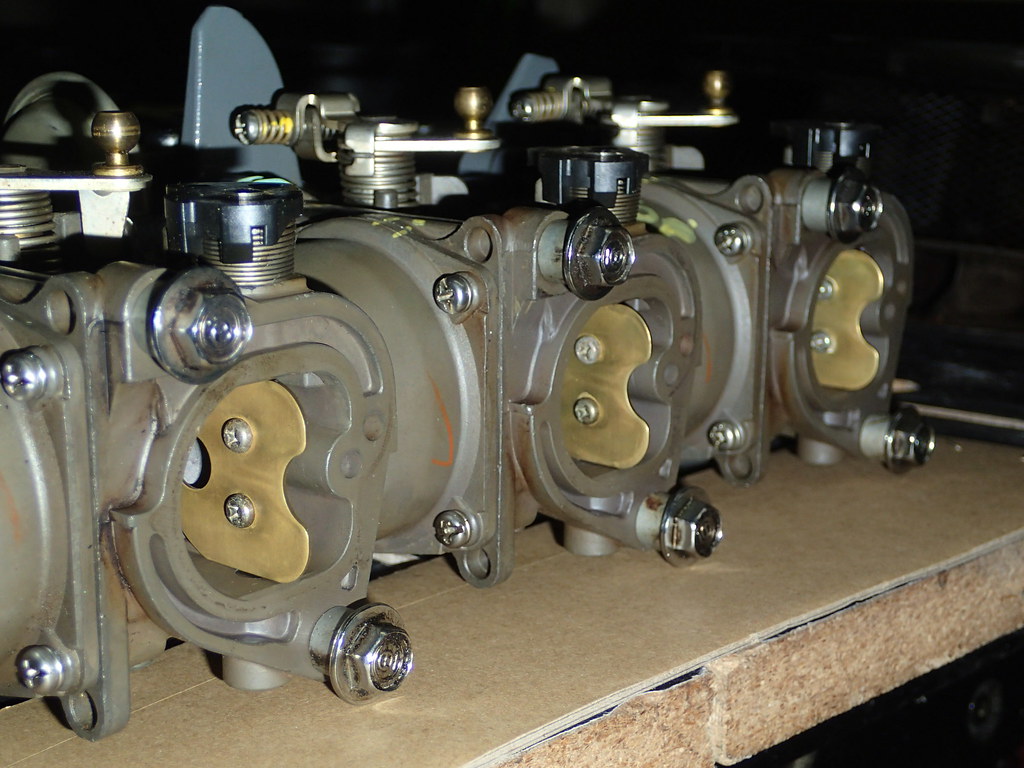
On carbureted outboards - which remain common on Biscayne Bay across a wide range of boat types - the carburetor is removed and fully disassembled. Every jet, passage, needle seat, and bowl is inspected for varnish, gum, water residue, and debris. A spray of carb cleaner on a unit that has been running phase-separated fuel is insufficient. The correct approach is a full manual cleaning of every passage or an ultrasonic bath, followed by new gaskets and a new float needle. Any gasket made from older rubber compounds is replaced with ethanol-compatible parts at the same time.
Injector Service on EFI Engines
On fuel-injected outboards, injectors are removed and cleaned ultrasonically or flow-tested on a bench. A partially clogged injector that passes a visual inspection can still deliver uneven fuel distribution under load. The fuel rail and pressure regulator are checked for debris, and the high-pressure fuel filter is replaced as a standard part of the service.
Filter, Fresh Fuel, and Sea Trial
A new fuel-water separator element goes in last, then fresh fuel with stabilizer. The mechanic starts the engine, lets it warm up fully, and monitors idle quality, throttle response, and any sign of continuing lean or rich running. A sea trial on Biscayne Bay confirms performance under load. Only after the engine runs cleanly through the full throttle range - not just at idle in the slip - is the job considered complete.
Frequently Asked Questions
Can I use a fuel additive to fix phase separation in my tank?
No - once phase separation has occurred, the layers cannot be re-blended by adding a treatment product. The chemistry of ethanol-water bonding at saturation does not reverse with additives. The only correct fix is draining the tank, purging the lines, and cleaning the carburetor or injectors before introducing fresh, stabilized fuel.
How do I know if my boat's tank is fiberglass and whether it is safe for E10?
Fiberglass tanks in older boats are often hidden - encased in the hull or covered by deck panels. If the boat pre-dates modern ethanol-compatible construction and you do not know the tank material, have a marine mechanic inspect it before assuming it is safe. Active signs of degradation include milky or discolored fuel, fine particles visible in the filter bowl, and a softening or bubbling of the tank exterior where accessible.
My outboard runs fine at idle but stalls at speed - is this a fuel problem?
That pattern is a classic ethanol-damage symptom. At idle the engine draws fuel slowly and can manage even a partially degraded supply. At wide-open throttle, fuel demand spikes and any restriction or contamination - clogged jets, a partially blocked fuel line, a failing fuel pump diaphragm degraded by ethanol - becomes apparent. A mobile mechanic can diagnose this on the water without requiring a haul-out.
Is fuel from a Biscayne Bay marina dock safer than fuel from a land-based gas station?
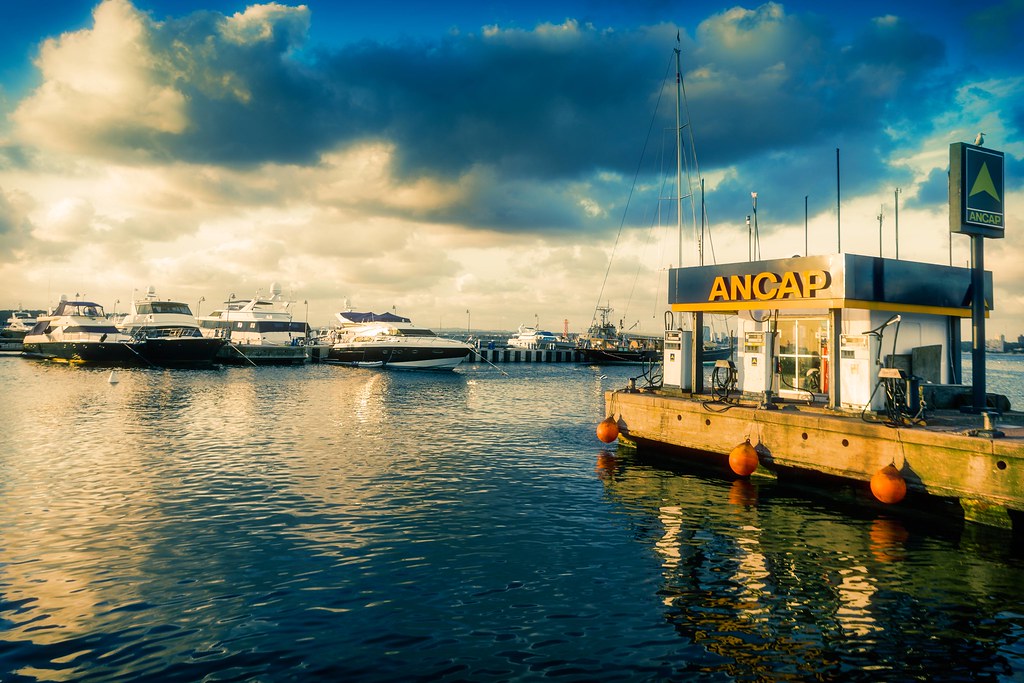
Marina fuel docks are more reliable about stocking straight E10 and are far less likely to carry E15, which is not approved for marine engines. The main advantage is knowing exactly what blend you are buying - something you cannot always confirm at a roadside pump without reading the label carefully. That said, marina E10 still requires proper storage practices once it is in your tank.
I top off my tank regularly throughout the summer - does that protect the fuel?
Topping off helps by reducing the air space above the fuel, but it does not reset the clock on fuel that is already aging at the bottom of the tank. If older, partially degraded fuel is present when you add fresh E10, the new fuel mixes with the old and the entire tank's stability is compromised from that point forward. A full drain followed by a fresh fill is the only way to genuinely start over.
What is the difference between a marine fuel stabilizer and a regular automotive fuel stabilizer?
Marine-grade stabilizers are formulated to address water and ethanol specifically, not just oxidation. Some automotive stabilizers handle oxidation well but do not include the corrosion inhibitors and demulsifiers needed in a vented marine fuel system exposed to coastal humidity. Check the product label for explicit marine and ethanol-treatment claims - and confirm it is compatible with your engine type before use.