South Florida boaters push their outboards harder than they realize. You're on the water year-round, the Bay never cools down, and the moment an overheat alarm fires there's nothing around you but open water and a long wait for a tow. Understanding exactly why outboards overheat in this specific environment - and what to do about it - is the difference between a quick dockside fix and a destroyed engine.
Why South Florida Is the Hardest Place in the U.S. to Run an Outboard
Every outboard cooling system works by pulling ambient water through the lower unit, circulating it around the engine, and dumping it overboard. The cooler that incoming water is, the more heat it can absorb before it exits. In northern states, boaters run their engines in water that stays well below 60°F for most of the season. Biscayne Bay doesn't work that way.
Bay water averages near 87°F in August and stays above 71°F even in February. That's not just warm - it's a significantly reduced thermal buffer between the cooling water entering the lower unit and the engine's operating temperature. A cooling circuit that barely keeps pace in Maine has almost no margin for error here. A partial blockage or a slightly worn impeller that would read as "fine" in cooler water will push a Coral Gables engine into the danger zone in the same conditions.
Add to that the fact that there is no off-season. A Coral Gables boater who runs a couple of weekend outings each month accumulates more than 100 engine hours in roughly 13 months. Manufacturer service intervals that seem conservative elsewhere become real annual deadlines here. Every one of those hours is logged in saltwater - a medium the National Association of Corrosion Engineers documents as roughly 800 times more corrosive than fresh water. Year-round salt exposure, minimal cooling headroom, and high operating hours make South Florida the most demanding environment for outboard cooling systems in the continental U.S.
How an Outboard's Cooling Circuit Works
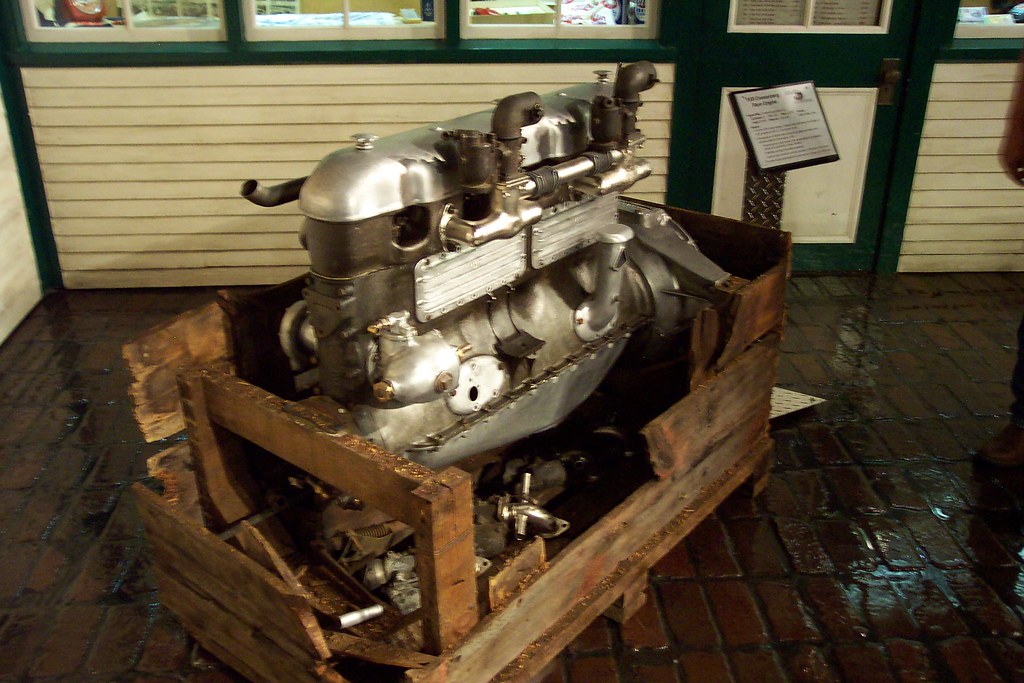
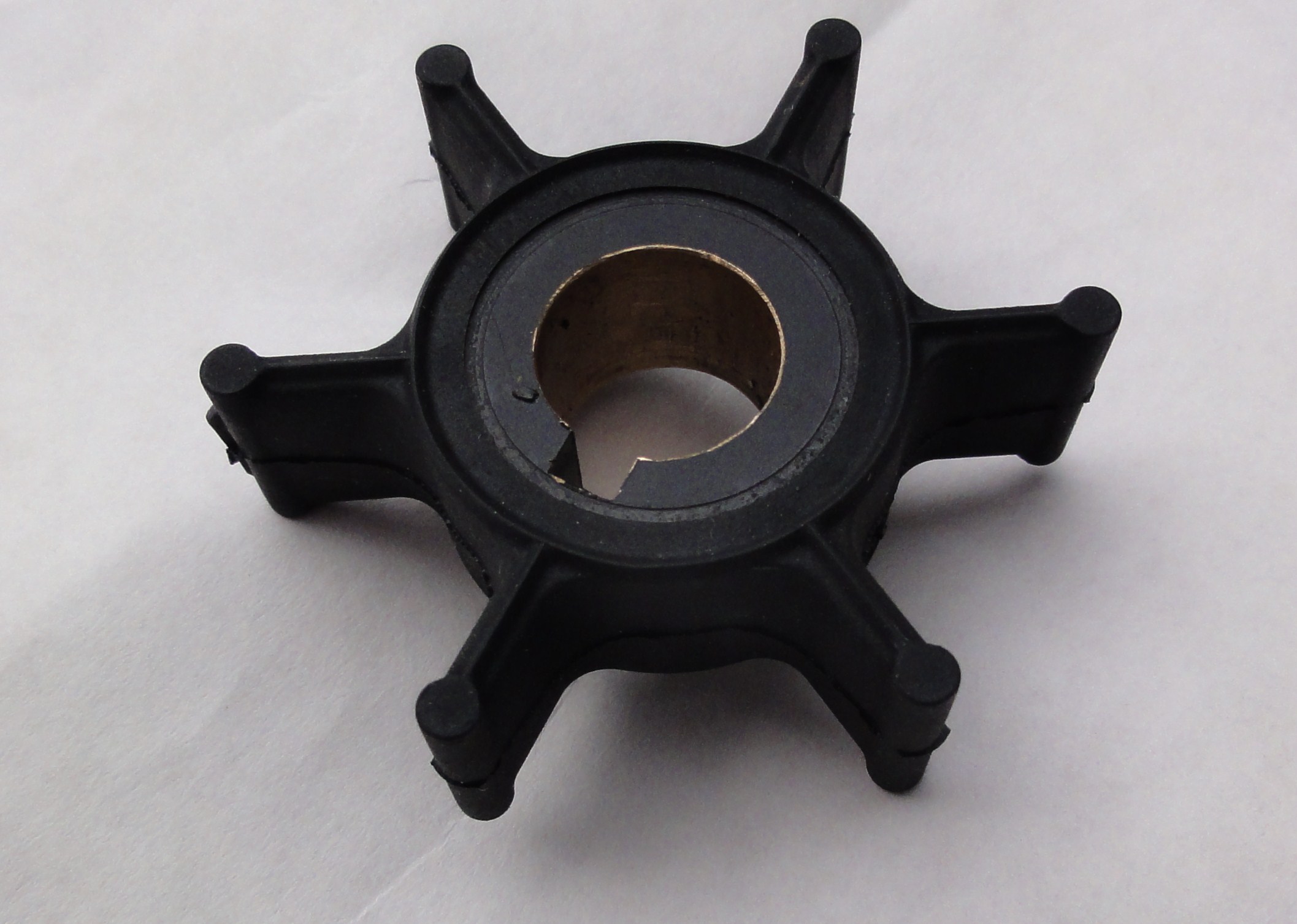
The system is straightforward, which makes it easy to trace where things fail. A water pump in the lower unit uses a rubber impeller - a spinning hub with flexible vanes - to pull raw water from the bay through an intake screen just above the propeller. That water travels up through the drive shaft housing and into the engine block, where it circulates through internal passages cast into the aluminum. A thermostat regulates flow, staying closed during warm-up and then opening fully once the engine reaches operating temperature.
Cooled water exits through the exhaust system and is also ejected through a small port on the side of the motor called the tell-tale. That thin stream you see coming from the side of a running outboard is not decorative. It's the most visible real-time indicator of cooling circuit health. A weak, spurting, or absent tell-tale precedes the dashboard alarm - sometimes by weeks.
Every component in this chain - the intake screen, the impeller, the thermostat, the internal passages, the heat exchanger on larger engines - can fail independently or compound each other's deterioration. In South Florida, several of them are under attack simultaneously and continuously.
The Number One Culprit: Water Pump Impeller Failure
If there's one component behind the majority of overheat events on Biscayne Bay, it's the water pump impeller. The vanes are molded from rubber, and rubber degrades. Florida heat accelerates that process. UV exposure, saltwater chemistry, and the mechanical stress of constant rotation all harden and eventually crack the vanes. Once a vane loses flexibility, it can't maintain contact with the pump housing wall, so it doesn't move as much water.
Most major manufacturers - Mercury, Yamaha, Suzuki - specify impeller replacement every 100 operating hours or once annually, whichever comes first. Yamaha's published service data goes further: the company recommends replacement every 300 hours or every three years even when the rubber looks intact, because vanes harden and lose pumping efficiency before they show visible cracking. An impeller that passes a visual inspection can still fail to move adequate water under load. Check your engine's service manual for the interval specific to your model.
The tell-tale stream is your earliest warning. A strong, continuous stream means the pump is working. A stream that's thinner than normal, that pulses, or that disappears at idle but returns at cruise RPM suggests vane deterioration before full failure occurs. Many boaters ignore a weak tell-tale for weeks before the alarm fires. By then the engine has been running hotter than it should on every one of those outings, adding cumulative stress to gaskets, cylinder heads, and passage walls.
Salt's Slow, Silent Attack on Cooling Passages
This is the cause most boaters never suspect because it develops across multiple seasons rather than all at once. When an outboard shuts down after a saltwater outing, residual water sits in the internal cooling passages. As the engine cools, that water evaporates and leaves salt crystals behind. Those crystals are abrasive, electrically conductive, and chemically reactive. Each heat cycle deposits a new layer. Over two or three seasons, they narrow cooling passages enough to restrict flow substantially - all without triggering an alarm.
What happens instead is that the engine runs slightly hot. Not hot enough to alarm. Just elevated a little on the gauge. Owners note it and move on, particularly if the motor performs well otherwise. But slightly hot, week after week, is cumulative stress on gaskets, cylinder heads, and aluminum passage walls. The salt crystals pit the aluminum, creating rougher surfaces that trap more sediment and allow deposits to build faster.
Heat exchangers on larger outboards accumulate mineral and salt scale more aggressively in South Florida's warm, mineral-heavy Bay water than in cooler or fresher environments. Marine service professionals working the Miami area recommend chemical descaling roughly every two years - more frequent than national guidelines suggest, but appropriate for local conditions. The fix when caught early is a chemical flush. Ignored for long enough, it means removing and mechanically clearing blocked passages, which is a far more involved job.
Flushing with fresh water after every single outing dissolves salt before it can crystallize. It takes about five minutes at the dock and is the single most effective thing a Coral Gables boater can do to slow this process.
Blocked Water Intakes and Biscayne Bay's Hidden Hazards
The water intake is a screened opening just above the propeller. It's small, it's close to the bottom, and Biscayne Bay gives it plenty of opportunities to clog.
The Bay's dense seagrass beds are the primary offender. Running at slow speed through seagrass - common along the Coral Gables waterway, around the sand flats south of Dinner Key, and near shallow-water launch ramps - lets grass wrap around the lower unit and pack into the intake screen. The engine may continue running but the tell-tale drops off immediately. Plastic bags, monofilament line, and floating debris cause the same result.
Sand and silt are subtler. Launching from sandy ramps or running in very shallow water stirs up particulate that the intake pulls in. Fine sediment can partially block the screen without being obvious from the helm. The engine may run normally at cruise speed, where it's drawing maximum flow and flushing the screen, but overheat at idle where water velocity drops. This partial-blockage pattern is one reason a boater can experience intermittent overheating that seems to resolve on its own - until it doesn't.
Clearing a blocked intake is usually straightforward if you catch it fast: shut down, tilt the motor up, and remove the debris from the screen. The mistake is ignoring a weak tell-tale and continuing at speed. A few minutes of reduced power is worth far more than the cost of what follows if you push through.
Other Causes Worth Ruling Out
The impeller and blockages account for most cases, but not all. A thermostat stuck in the closed position won't allow the cooling circuit to flow fully once the engine warms up. Unlike a failed impeller, a stuck thermostat often permits a normal tell-tale stream because water is still moving - just not enough of it for sustained operation at temperature. The engine runs fine on startup, then climbs steadily toward the alarm as operating time increases.
Anode condition matters more than most boaters appreciate. In full saltwater environments like Biscayne Bay, sacrificial anodes should be inspected every two to three months and replaced well before they are more than halfway consumed. Annual inspection is not sufficient for year-round South Florida use. A depleted anode accelerates galvanic corrosion of the surrounding aluminum, which can pit and narrow cooling passages from the outside in.
One specific and underappreciated anode mistake: magnesium anodes are designed for freshwater use and must not be installed on saltwater boats. In saltwater they corrode so aggressively that they generate excessive galvanic current - enough to actively destroy the aluminum lower unit they're supposed to protect. Zinc or aluminum anodes are the correct choice for saltwater. It's an easy error to make at a parts counter, and the damage unfolds over months.
On modern fuel-injected outboards, ethanol-blended fuel - sold at virtually all Florida marine fuel docks - can phase-separate and form varnish deposits within 30 days in Florida's heat and humidity. Clogged injectors reduce combustion efficiency and raise exhaust gas temperatures. A fuel system problem layered on top of a marginal cooling circuit pushes temperatures into dangerous territory faster than either would alone.
Warning Signs to Catch Before the Alarm
The alarm exists to prevent destruction. You don't want to wait for it.
Check the tell-tale every time you start the engine. It should flow steadily within 30 to 60 seconds of startup. A stream that's thinner than usual, that pulses, or that disappears at idle but returns at higher RPM all point to partial restriction somewhere in the circuit. Don't dismiss these signs because the alarm hasn't fired - a weak tell-tale often precedes the alarm by weeks.
Watch the temperature gauge throughout the outing. A needle that creeps rather than spikes - moving slowly higher than its usual resting position over the course of an outing - is the most useful early warning of a developing problem. It won't trigger an alarm. It won't affect power noticeably. But it means cooling headroom is narrowing.
Pay attention if the boat feels sluggish on a hot day compared to its behavior in cooler conditions. Some performance reduction in summer heat is normal for any engine, but a meaningful change paired with a warmer-than-usual gauge reading is worth investigating before the next trip out.
Changes in exhaust sound - a deeper or more bubbling tone than the engine's normal note - can reflect changes in water flow through the exhaust system. This is subtle, but boaters who know their engine's baseline notice it before a gauge reading confirms anything is wrong.
What to Do the Moment the Overheat Alarm Sounds
The alarm means the engine has already reached a temperature at which damage can begin within minutes. The goal is to stop adding heat immediately.
Cut power and come off plane. Drop to idle or neutral. Don't shut down yet - a running engine at idle still circulates more cooling water than a stopped one. If the tell-tale stream is present and flowing normally, idle slowly toward the nearest shore or dock while watching the gauge. If the stream is absent or the gauge keeps climbing even at idle, shut the engine off.
Once stopped, do not restart. The temptation to run it to the ramp is exactly how recoverable damage becomes permanent. Sustained overheating can warp aluminum cylinder heads. A warped head will re-seat against the block during towing in a way that makes the damage worse and harder to repair. Running a scored engine even briefly during transport - with no circulation at all - can convert a head gasket job into an engine replacement. The cost difference between those two outcomes is severe.
Call a mobile mechanic and wait at the dock. An on-site diagnosis performed where the failure happened is the safest possible outcome. The mechanic arrives with tools, pulls the relevant components, and can assess the situation within an hour - without subjecting a stressed engine to road transport vibration and temperature cycling that can seat damage permanently.
What a Mobile Marine Mechanic Does On-Site
Diagnosis sequence matters. A trained technician working a modern outboard doesn't start by replacing parts at random - they start with data.
Factory-level OBD diagnostic tools can read stored fault codes from the ECU, pull live coolant-temperature sensor data, and review RPM and load history logged by the engine's computer. That history often identifies exactly when and under what operating conditions the temperature first started climbing - information that points directly at the cause before a single bolt is turned. It's data a visual inspection cannot provide, and it disappears the moment the engine sits cold in a shop for a week.
From there, the diagnostic sequence moves through the most likely causes in order: impeller condition and pump output, thermostat function, intake screen for blockage, internal passage condition, and anode assessment. If the impeller vanes are hardened or cracked, they're replaced on the dock. If a thermostat is stuck, it's tested and swapped. If passages show early scale buildup, a chemical flush can begin at the dock rather than requiring a return visit.
Working at the dock also preserves failure evidence that disappears in transit. Debris packed into an intake screen during a Bay outing may dislodge during towing. A thermostat that sticks only at operating temperature may behave normally once cold. Intermittent overheating that appeared at full load on the water may not reproduce in a shop environment. On-site diagnosis catches failure modes that shop conditions hide.
A Year-Round Overheating-Prevention Schedule for Coral Gables Boaters
Generic maintenance checklists don't account for year-round saltwater operation. The following schedule does.
After every outing: flush the engine with fresh water for at least five minutes using a flush fitting or ear muffs over the intakes. This is not optional in saltwater - it dissolves salt before it can crystallize in the passages. Check the tell-tale stream before you flush. It's the fastest real-time cooling system check you have.
Every two to three months: inspect sacrificial anodes on the lower unit, trim tabs, and any hull fittings. In Biscayne Bay's full saltwater environment, anodes deplete faster than national norms. Replace any anode that is more than halfway consumed. Confirm you are running zinc or aluminum anodes - not magnesium, which is destructive in salt.
At the manufacturer-specified interval - typically 100 engine hours or annually: replace the water pump impeller. This is a non-negotiable service item for South Florida use; confirm the exact interval in your engine's service manual. Have the thermostat tested at the same visit. Review the fuel system for signs of ethanol-related varnish deposits, particularly if the engine has sat more than a few weeks between outings.
Every two years: have the heat exchanger chemically descaled by a certified marine technician. Accelerated mineral and salt scale accumulation in Miami-area Bay water makes this interval appropriate locally, even if national guides suggest otherwise. Ask the technician to pull ECU fault history during this service - stored codes sometimes reveal intermittent overheat events the gauge never showed you.
Before any long offshore run: inspect the lower-unit intake screen and confirm a strong, steady tell-tale at startup. A run offshore is not the place to discover a screen that's been partially clogged since last weekend's Bay outing. Verify it at the dock before you leave the inlet.
Consistent prevention costs a fraction of what a single overheating event costs in repairs - and it keeps the boat in the water rather than on a trailer waiting for parts. For Coral Gables boaters running year-round on Biscayne Bay, the schedule above reflects the actual operating environment, not a national template built around northern freshwater seasons.